
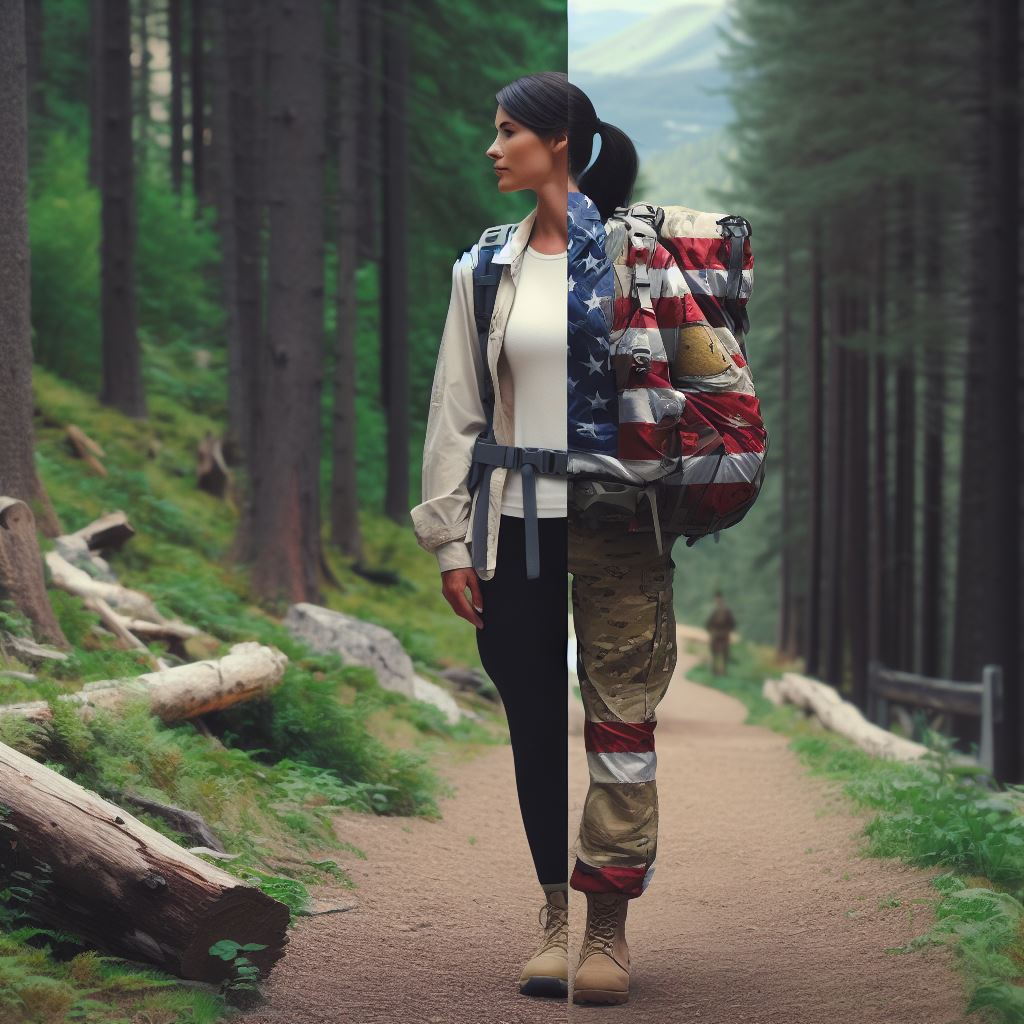
At first glance, the realms of backpacking and the Light Foot Militia trainings may appear to be vastly dissimilar. However, upon closer examination, a multitude of shared proficiencies emerge, emphasizing the significance of situational awareness, navigation prowess, and survival acumen in both pursuits.
Situational awareness: A cornerstone of both backpacking and Light Foot Militia trainings, situational awareness entails being acutely attuned to one’s surroundings and potential hazards. For backpackers, this skill can prove instrumental in avoiding disorientation, injury, or wildlife encounters. Similarly, for Light Foot Militia, situational awareness can mean the difference between life and death in the face of enemy ambushes or other perils.
Navigation: The essence of progress, navigational proficiency is a fundamental competence for both backpackers and Light Foot Militia members alike. For backpackers, this skill is indispensable in locating their campsite, water sources, and trailheads. In the military, navigating effectively is not only about moving across the battlefield but also a critical aspect of accomplishing missions.
Survival skills: Thriving in adversity, survival skills encompass vital aptitudes required to endure in challenging environments, such as sourcing food and water, erecting shelter, and igniting fires. Both backpackers and Light Foot Militia members must possess a foundational knowledge of these skills, should they find themselves stranded or injured in the wild.
Fitness: Both parties necessitate robust physical conditioning to bear the weight of their gear and navigate through demanding terrains. A study by the United States Army Research Institute of Environmental Medicine found that soldiers carrying heavy loads (up to 60 pounds) experienced significant increases in energy expenditure, heart rate, and oxygen consumption. Similarly, backpackers carrying heavy packs (up to 40 pounds) have been shown to exhibit similar physiological responses.
Teamwork: Cooperation within a team is a commonality for both backpackers and Light Foot Militia members, demanding effective communication and collaboration. In both cases, success is often contingent on the ability to work together cohesively towards a common goal. A study published in the Journal of Personality and Social Psychology found that teams with high levels of cohesion performed better on tasks requiring coordination and cooperation.
Problem-solving: Quick and efficient problem resolution is often paramount for both groups, spanning tasks from mending equipment to devising strategies for river crossings. In both backpacking and Light Foot Militia trainings, the ability to think on one’s feet and come up with creative solutions to unexpected challenges can be critical to success. A study by the Academy of Management Journal found that teams with a high level of problem-solving efficacy were more likely to achieve their goals.
First aid and medical knowledge: Both soldiers and backpackers benefit from having a basic understanding of first aid and medical procedures. This knowledge is invaluable in emergencies and can make a critical difference in survival. A study by the Wilderness & Environmental Medicine journal found that backpackers with first aid training were more likely to be able to provide assistance in emergency situations.
Rope work and knot tying: Proficiency in tying knots and using ropes is crucial for various tasks in both scenarios. Whether it’s securing gear, setting up shelters, or navigating challenging terrain, this skill is indispensable. A study by the United States Army Engineer Research and Development Center found that soldiers with knot tying skills were able to complete tasks more quickly and efficiently.
Basic cooking and food preparation: While soldiers often have access to MREs (Meals Ready-to-Eat), knowing how to prepare basic meals using minimal resources is an asset. Backpackers, on the other hand, rely on lightweight, easy-to-cook foods. In both cases, the ability to prepare nutritious meals is essential for maintaining energy levels and overall health. A study by the British Journal of Nutrition found that soldiers who consumed high-quality diets performed better on physical and cognitive tasks.
Camouflage and concealment: Both soldiers and backpackers may find themselves needing to blend into their surroundings, whether for tactical advantage or to minimize impact on the environment. In both cases, the ability to effectively camouflage oneself can be critical to success. A study by the United States Army Natick Soldier Research, Development and Engineering Center found that soldiers who were able to effectively camouflage themselves were less likely to be detected by threats.
Hygiene and sanitation: Maintaining personal hygiene and practicing proper sanitation measures is crucial for health and well-being in both military operations and extended backpacking trips. In both cases, neglecting hygiene can lead to a variety of health problems, such as dysentery. A study by the Centers for Disease Control and Prevention found that soldiers who practiced good hygiene were less likely to get sick.
Weather interpretation: Being able to read weather patterns and make informed decisions based on forecasts is essential for both groups. This skill helps in planning and adapting to changing environmental conditions. A study by the National Oceanic and Atmospheric Administration found that backpackers who were able to accurately interpret weather forecasts were less likely to be caught in dangerous weather conditions.
Firearm safety (for soldiers): Light Foot Militia are extensively trained in the safe handling and use of firearms. While backpackers typically do not carry firearms, they may need to be aware of firearm safety if venturing into areas where hunting is permitted. A study by the National Shooting Sports Foundation found that people who are trained in firearm safety are less likely to be involved in firearm accidents.
Environmental awareness: Both groups must have an understanding of and respect for the natural environment. This includes knowledge of local flora and fauna, Leave No Trace principles, and responsible outdoor practices. A study by the Leave No Trace Center for Outdoor Ethics found that backpackers who are aware of Leave No Trace principles are less likely to damage the environment.
Physical and mental resilience: Both soldiers and backpackers often face physically and mentally demanding situations. Building resilience to endure challenges is a shared trait. A study by the American Psychological Association found that people who are resilient are better able to cope with stress and adversity.
While seemingly distinct pursuits, backpacking and light foot militia operations share a surprising number of parallel skills. These shared proficiencies highlight the importance of situational awareness, navigation prowess, and survival acumen in both endeavors. In addition to the skills listed above, backpackers and Light Foot Militia members also share a common appreciation for the outdoors, a commitment to self-reliance, and a willingness to face challenges head-on.
Sources:
- United States Army Research Institute of Environmental Medicine (USARIEM)
- Journal of Personality and Social Psychology
- Academy of Management Journal
- Wilderness & Environmental Medicine
- United States Army Engineer Research and Development Center (ERDC)
- British Journal of Nutrition
- United States Army Natick Soldier Research, Development and Engineering Center (NSRDEC)
- Centers for Disease Control and Prevention (CDC)
- National Oceanic and Atmospheric Administration (NOAA)
- National Shooting Sports Foundation (NSSF)
- Leave No Trace Center for Outdoor Ethics
- American Psychological Association (APA)

 Pennsylvania Lightfoot Community Preparedness